
Sometime around the 7th century BC, a local Illyrian tribe, the Taulanti, invited a group of Greek colonists from Corinth and Corcyra (Corfu) to help them establish a trading colony in what is now Durrës. Among them we find the Illyrian king Epidamnos and his grandson Dyrrachus, as well as the Corinthian Falio, a descendant of Heracles. According to the ancient authors, the Taulanti needed the Greek settlers to help expel their enemies, the Liburni (a tribe hailing from the coastal region of what is now Croatia). The city grew rapidly and became a very successful trading centre, one of the richest in the ancient Greek world.
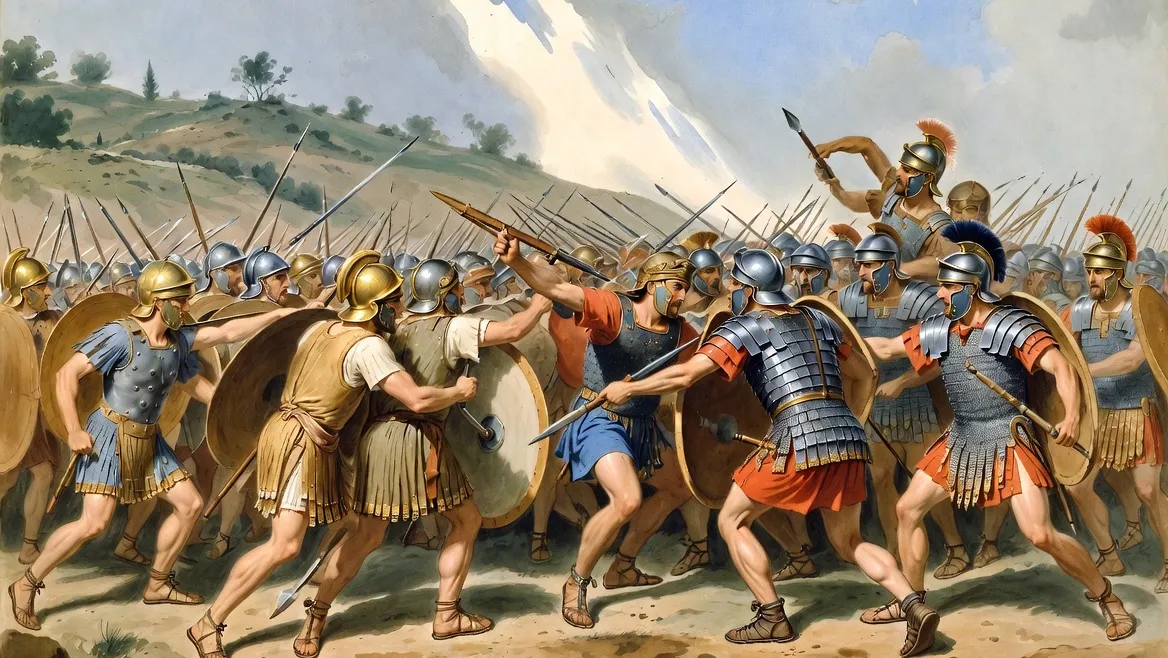
For the next few centuries, the city was colonised by different kingdoms on the Adriatic coastline until the Romans arrived. The Roman Republic had expanded trade and control around the Mediterranean, but was plagued by the Illyrian queen, Teuta, and eventually declared war on her. She was defeated and lost most of her territory, but is still remembered as a hero to people for holding off the power of Rome.
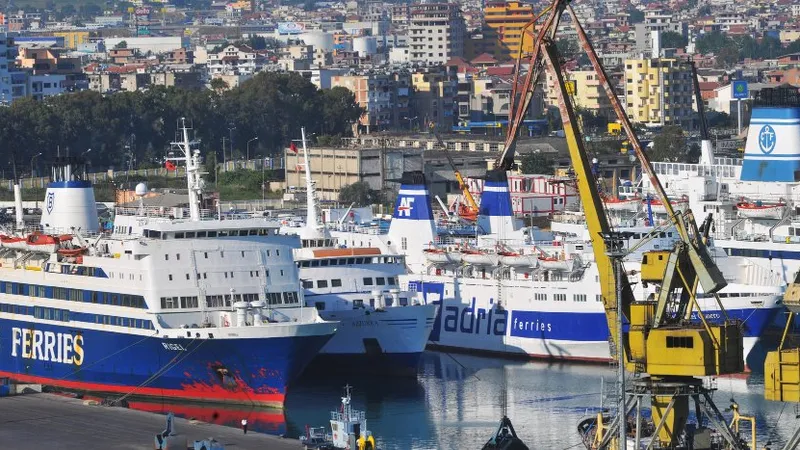
After the Illyrian wars, the city came under Rome’s control. It was an important port of call for those travelling up the Adriatic and also became a major military and naval base. However, the Romans disliked the original name of the settlement, Epidamnos, because it sounded too much like the Latin word for ‘loss’ or ‘harm’. They preferred the name Dyrrachium, honouring Epidamnus’ grandson, Dyrrachos, who was considered a son of Poseidon. During the Roman Civil War, Julius Caesar fought Gnaeus Pompey here (by all accounts somewhere between Plepa and Kavaje!).
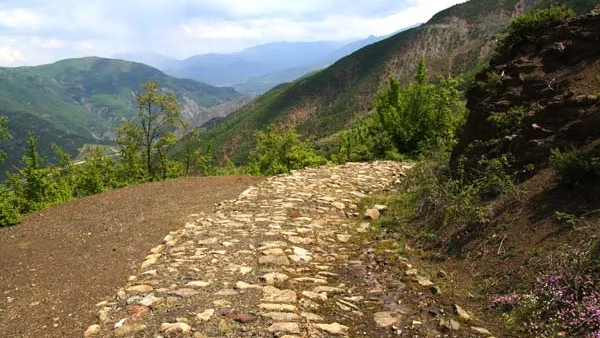
Dyrrachium prospered under Roman rule, and the great road that eventually led all the way to Constantinople, the Via Egnatia, started from the city. A later Roman emperor, Anastasius I, was born in Durrachium. Sometime in the late 400s BC, a massive earthquake destroyed the city's defences. Anastasius rebuilt them, creating the strongest fortifications in the Balkans.
Little affected by the fall of the Western Roman Empire, Dyrrachium continued as a significant port under the Byzantine Empire. Control changed hands a few times, and its importance dwindled until the Normans finally took it from the Byzantines.
After the Fourth Crusade, the Republic of Venice took control and formed the Duchy of Durazzo. The city was then the focus of a tug-of-war between Sicily, Epirus, Charles d'Anjou, Serbia, etc., until Ottoman rule was established in 1501. Its importance continued to decline under the Ottomans, and the people moved further inland, focusing on the rich salt deposits found nearby. On 21 November 1912, as the Ottomans fought the First Balkan War, a group of nationalists raised the Albanian flag over Durrës. Two days later, Albania declared independence.
The city changed hands during the Balkan Wars and World War I, enduring Serbian, Greek, Italian, Austro-Hungarian, and Bulgarian occupations, plus devastating naval bombardments. Under King Zog I, it briefly thrived as a modernised gateway—until Mussolini’s forces invaded on April 7, 1939. In the opening hours of resistance, Sergeant Mujo Ulqinaku manned a machine gun atop the Venetian Tower, inflicting heavy casualties on the landing Italians before an artillery shell killed him. Italian occupation (1939–1943) turned Durrës into a vital Axis supply hub, followed by harsher German control after 1943. Fierce partisan fighting liberated the city in November 1944, clearing the path for Enver Hoxha’s communist regime.
Durrës is considered the oldest continuously inhabited city in Albania. You can see this long history in its architecture, important names, and mixture of tradition and culture. Take a walk through its streets and admire the Roman Amphitheatre, the Byzantine Forum and much more. Don't miss out on seeing a local football match and cheer for Teuta!!