
Turning down the Rruga M. Varoshi from Sheshi Demokracia, the narrow, pockmarked street meanders between tiny shops, cafés and barbers. In the half-dark of an autumn evening, earthquake-shattered, Italianate buildings – only their upper stories still occupied – loom out of the gaps between modern apartment blocks, giving the street the feel of a near-future, post-apocalyptic William Gibson novel. On past the Peeping Tourist exhibition, it goes until one spies the backside of the Theatre Aleksander Moisiu, its eastern edge leading to the central square.
It was down this dark thoroughfare that I first started to feel Durrës was something more than just another exotic stop on someone’s globe-trotting itinerary. I’d picked it almost at random as a bolt-hole to wait out the next cycle of the Schengen Shuffle, the three-month France-to-somewhere-else switchback that dominates my life. Having no visa for France and the UK no longer being in the EU, I have to spend 90 days in every 180 away from the 19th Century railway building I’m renovating in Brittany.
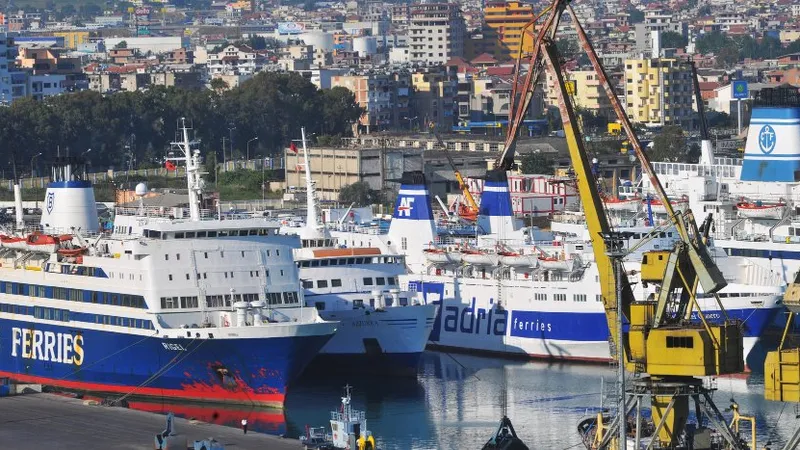
As a test run, I’d booked a small room on the Vollga seafront over the Christmas 2023 break, and once I’d settled in, I set off to gain an impression of the city. Stumbling north up Rruga Egnatia from the port, past the Blue Star mall, I boggled at the traffic, the half-constructed buildings, and the chaos of the bus station. I wondered, “What the hell would it feel like to live in the middle of all this?” Eight months later, I knew.
Arriving back in September the following year, I soon found my heaven within this haven. Exploring north from my apartment on Rruga e Dëshmorëve, I came across the Fresh Market, the two Tregu, a grid of streets crammed with local shops with a café or three on every block, buildings without external render (and sometimes without roofs) and the endless one-man street markets that appeared on kerbsides every weekend.
I was smitten. Itching to create something for the city and use that as a vehicle for getting to know the place better, I set out to map as many inner city bus routes as possible as a resource for the DEAR expat group on Facebook. Rruga e Dëshmorëve and Adria, the streets that bisect the old town, are the start points of every bus route and the location of my apartment so I was in the right place to start. For two weeks, I rode every route, screenshotting the places where the buses stopped and then plotting them on a map embedded in a WordPress website. This became https://durresbybus.com. Through this project, I learned the names of many neighbourhoods: Spitalle, Ish Keneta, Shkozet, Porto Romano, Plazh, Arapaj, and Golem. I began to feel like I had sunk slightly beneath the city’s surface, was less the hapless tourist of two weeks before.
And walking/riding through these streets, I also felt a sense of a city and people pulling themselves up by the bootstraps. In so many European cities now, there’s a sense of stagnation – culture and societies losing purpose, unsure where they’re going. But Albania, for all its hazy approach to rules and its still-to-be-woven social fabric, is pushing and hustling forward, eyes on the prize. And it's this frothing, seething, cheerful chaos that creates such a powerful attraction for me. Some days I think I can sense the bedrock of old Illyria, layered over with a fervent desire for a modern, European, urban identity – the city embracing the past and roughly shrugging it off in the same moment.
And now we expats are here too, refugees from dull towns, political chaos, past lives, already led – or just stuck, like me, in Schengen Shuffle hell. We, too, have a chance to make something of ourselves in this city and, just maybe, add something of ourselves to it, for the better.
Welcome to Durres Life.